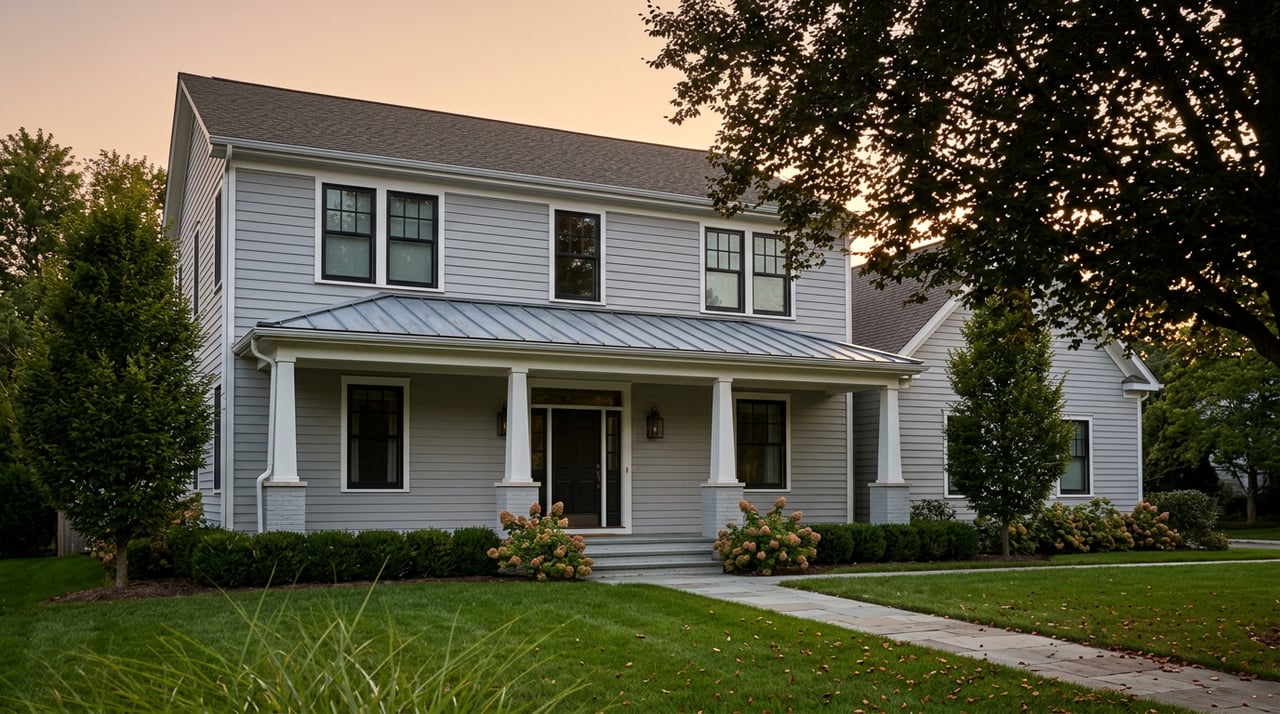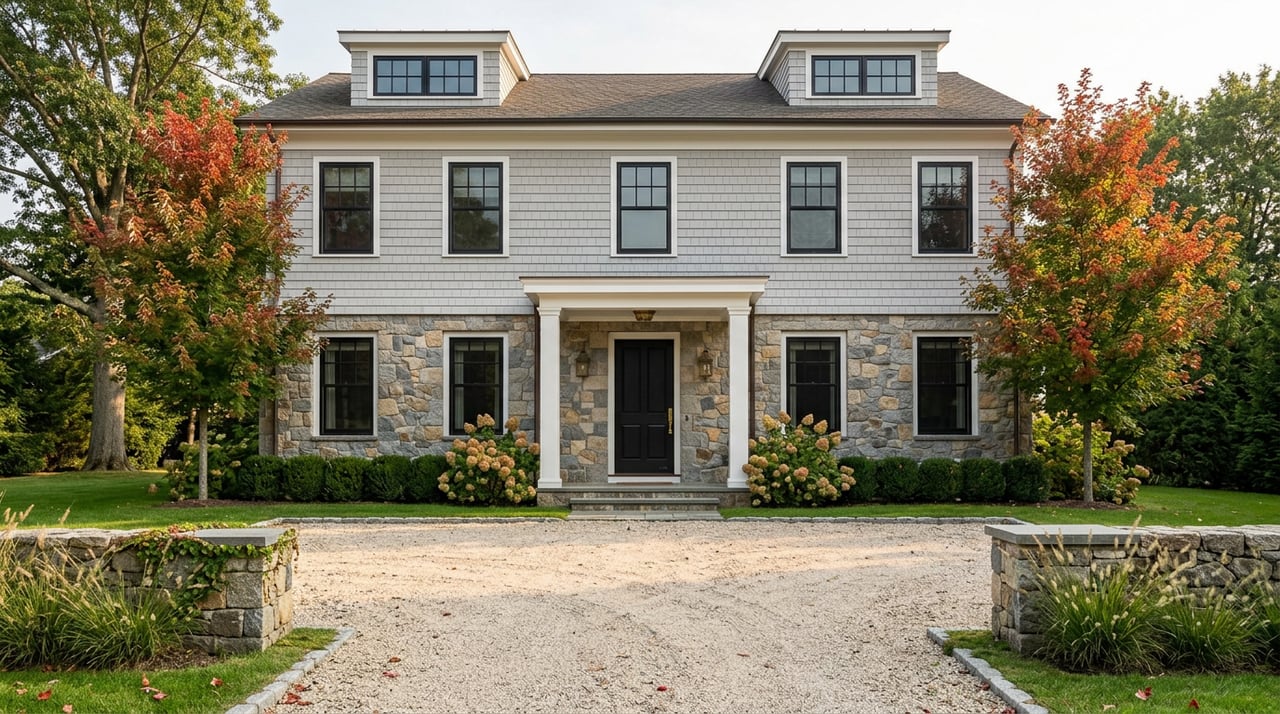
Drive through Upper Saddle River on any given Tuesday and you will not pass a Main Street. There is no strip of storefronts to window shop, no train station plaza where neighbors linger over coffee. The borough is built on wide, tree-shaded lots and long private driveways, the kind of layout that keeps daily life quiet and mostly indoors. So where does a town like this actually gather?
The answer, it turns out, is a specific stretch of Lake Street, and it only fully activates twice a year, a few weeks apart, each fall.
Two organizations, one corridor
Upper Saddle River's public life does not run through commerce because there is barely any commerce to run it through. Instead, the town's biggest shared moments are built by volunteers, on borough-owned land, using two separate institutions that rarely get mentioned in the same sentence: the Upper Saddle River Historical Society, organized in 1977, and USR CARES, the community group that partners with the borough on civic events. One keeps a 1739 farmhouse running. The other turns a ballfield into a beer garden. Both happen along the same short piece of road.
If you live here, you already sense this rhythm without naming it. Summer is quiet. Then, in a compressed six or seven weeks each fall, the town produces its two most crowded Saturdays of the year.
The farmhouse keeps Sunday hours through August
Before the fall calendar takes over, the Hopper-Goetschius House Museum is still finishing its summer season. The house, built by the Hopper family in 1739, is the oldest home standing in Upper Saddle River. It was added to the National Register of Historic Places in 1983 and presented to the borough two years later by Clinton and Grace Carlough, whose family had lived there for generations. Since 1985 the Historical Society has run it as a museum, and every July and August it opens for Summer Sundays, with tours and demonstrations that change from week to week.
If you have not made it out yet this season, there is likely still a Sunday or two left before the museum shifts into its fall programming, so it is worth checking the Historical Society's calendar before the last weekend passes.
The Harvest Festival turns the same rooms into a working farm
When Summer Sundays wind down, the same property hosts the year's larger event: the Harvest Festival. This is not a folding-table craft fair. Past festivals have run:
- Old-fashioned cider pressing
- A working blacksmith demonstration
- Open-hearth cooking in the museum's original kitchen
- A fortune teller
- Lessons in the property's one-room schoolhouse
- Games and prizes for kids
- Live music from a bluegrass act billed as Growing Old Disgracefully
Admission has run five dollars for adults, with children under twelve and Historical Society members admitted free, and food available for purchase on-site. What makes the festival worth noting for anyone who lives here, rather than just visiting once, is what it says about the property itself. The same rooms that host quiet Sunday tours in July are, by October, hosting a bluegrass set and a working cider press. It is one building doing double duty as both a museum and a genuine gathering place, which is rarer than it sounds for a house this old.
Then the borough builds its own version, down the road
A few weeks later, the borough and USR CARES stage Oktoberfest at Lions Park, the same municipal park that anchors the Lake Street corridor. Where the Historical Society's event leans into 18th-century Dutch farm life, Oktoberfest leans into the opposite: a German biergarten, international food vendors, a hayride, a bounce house, live music, a family fun tent, and a separate senior tent with lunch and activities. There is also a silent auction and a standing invitation for the town's community and service organizations to set up alongside the food and games.
Seeing these two events side by side makes the pattern easier to name.
| Harvest Festival | Oktoberfest | |
|---|---|---|
| Run by | USR Historical Society | Borough of Upper Saddle River and USR CARES |
| Setting | Hopper-Goetschius House Museum | Lions Park |
| Signature draw | Cider pressing, blacksmithing, live bluegrass | German biergarten, hayride, silent auction |
| Cost | $5 adults, free under 12 and for members | Free to attend, food and vendor purchases separate |
Same season. Same short stretch of Lake Street. Two entirely different volunteer engines building what amounts to the town's temporary Main Street.
A third engine, running quieter
There is a third institution doing similar work on a smaller scale: the Upper Saddle River Library. Its fall newsletter lays out a season of adult and teen programming, and cardholders get access to everything from The Wall Street Journal to a curated OverDrive collection with priority holds for residents. It will never draw a crowd the size of Oktoberfest, but it is the same pattern in miniature: a town with no commercial center leaning on its public institutions, not its storefronts, to give residents a reason to show up somewhere together.
Why this matters if you already live here
None of this is really about tourism or transplants. It is about understanding how a town without a downtown still manages to feel like a town. Upper Saddle River's large lots and private settings are part of what draws people here in the first place, but privacy at that scale can also mean isolation if nothing counterbalances it. What counterbalances it, at least for a few weekends every fall, is a 287-year-old farmhouse run by a volunteer historical society and a borough-run beer garden a short walk away.
If you are new to town, this is the calendar worth circling: catch the last of Summer Sundays before the museum shifts gears, plan a Saturday for the Harvest Festival's cider press and bluegrass set, and save another for Oktoberfest at Lions Park. Between the three, you will have met more of your neighbors than a season of quiet Tuesday drives ever could.
Claudia has spent more than two decades getting to know Upper Saddle River at exactly this level of detail, not just its home prices but the institutions and traditions that make one town feel different from the next. If you have questions about the neighborhood, whether you are settling in or simply curious about what is coming up next season, Claudia H. Sanchez is always glad to talk through it. And if you are weighing a move of your own, her team offers a complimentary home valuation whenever you are ready for that conversation.