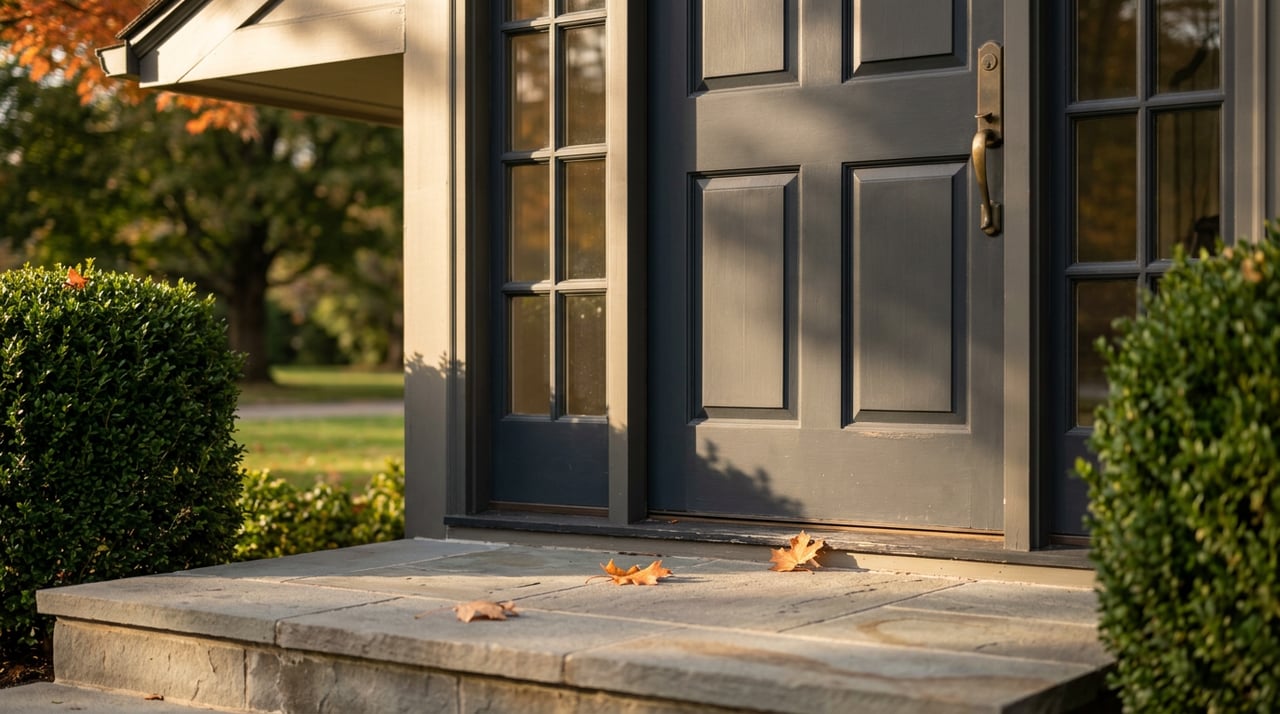
A Suburban News report describes how, behind Arturo's, in a dirt buffer no wider than two feet, snake squash climbs the entrance ramp. Mint grows wild between the foundation bushes out front. The restaurant has been doing this since 1982, when a husband and wife who grew up farming in Sicily opened a kitchen in Midland Park and decided the herbs might as well come from the property itself. Their son now runs the place, and by his own estimate, roughly half of what lands on a plate at Arturo's started somewhere within a few miles of the restaurant, whether that's the bushes out front or a farm supplier a short drive away.
That kind of detail is part of Arturo's story. It shows up because someone who has eaten at Arturo's for twenty years happens to know it. That's the version of Midland Park worth paying attention to this fall: not a single headline event, but a handful of small, specific facts that only make sense once you notice how tightly packed the borough's daily life actually is.
Eleven Central and Twenty-Nine Central
Central Avenue is short. It doesn't have the sprawl of a village green or a train-station Main Street. But two of Midland Park's better-known kitchens sit on it, close enough that their addresses tell the story on their own.
Eleven Central Restaurant Bar takes its name directly from its street number. A short walk down the same block, Rosario's Trattoria & Pizzeria serves an extensive Italian menu, from pasta and veal to a raw bar, out of 29 Central Avenue. Two restaurants, one road, addresses eighteen numbers apart.
Widen the frame slightly and the same pattern holds. Willow & Whisk and Soma Cafe & Creperie both show up on local breakfast lists, and Soma has been recognized by (201) Magazine for its morning menu. Graze and Morning Bloom round out the rotation. None of these are large operations. All of them sit inside the same compact downtown footprint, which means a resident deciding where to get breakfast on a Saturday isn't choosing between neighborhoods. They're choosing between doors on the same short stretch of town.
That density is easy to miss if you're only comparing Midland Park to places with a longer commercial strip. It's also exactly the kind of detail that explains why a restaurant like Arturo's can survive on word of mouth for over four decades. In a town this size, the story travels the length of a few blocks and back.
Mario Allegra, who runs Arturo's and grew up watching his mother garden between the bushes, put it simply once when a reporter asked why he bothers sourcing locally when it costs more.
"There's no hardships involved in purchasing local."
That's not a slogan. It's a description of what happens when your supplier is close enough that a problem gets solved with a phone call instead of a freight claim.
What the Brook Actually Touches
Ask a Midland Park resident where they walk the dog in October and you'll likely hear "Goffle Brook Park." It's worth knowing exactly what that name refers to, because the answer is more specific than most people assume.
The park most people mean, the one with the Duck Pond, the Rea House and its Passaic County Arts Center, and trails that follow Goffle Brook past mature woodland, sits in Hawthorne. It was designed in the early 1930s by the Olmsted firm, the same practice that grew out of Frederick Law Olmsted's work, and it has been listed on the National Register of Historic Places since 2002. That history belongs to Hawthorne. It's a genuine landmark, though it lies outside Midland Park.
What Midland Park does have is the brook itself. Goffle Brook doesn't stop at the Hawthorne line. It runs north through Ridgewood and continues into Midland Park, where old dams still sit just west of the spot where Goffle Road crosses the water. The railroad tracks that parallel the brook for most of its route cross it only twice in the whole stretch from Hawthorne to Wyckoff, and one of those two crossings is right here in Midland Park.
So the postcard version of Goffle Brook Park, with the historic bridge and the arts center, is a Hawthorne institution. The quieter version, the actual water moving under Goffle Road with a low dam holding it back, is Midland Park's own. Neither fact makes the walk less worth taking. It just means the two towns are sharing credit for one waterway, and only one of them got the Olmsted plaque.
Two Saturdays, Seven Days Apart
If the food scene explains how compact Midland Park's daily life is, the civic calendar explains how compact its fall actually is.
The borough's Sports and Recreation Department has scheduled MP Community Day for Saturday, October 3. In past years the event has been held at the Dairy Street Park area, with live music, games, and the fire department cooking up its usual hot dogs and burgers for the crowd.
One week later, on Saturday, October 10, the borough runs its Fall Shred Day from 9 a.m. to 1 p.m. at 280 Godwin Avenue, the municipal building that anchors the other end of downtown. It's the kind of event that never makes anyone's list of fall festivals, but it's also the one most residents actually plan around, since it's the closest thing Midland Park has to an annual excuse to finally clear out the filing cabinet.
Seven days separate the two events, giving Midland Park a compact early-October stretch of civic programming.
For residents who already went through the annual Town Wide Yard Sale on September 12, Community Day and Shred Day are simply the next two dates on a calendar that moves fast. These are two more dates, a week apart, in the borough's fall calendar.
Why the Compression Matters
None of this is really about restaurants or brooks or shred trucks on their own. It's about what happens when a town's commercial and civic life both fit into a small enough footprint that residents run into the same names over and over. The same short stretch of Central Avenue holds a restaurant whose owner still gardens the way his mother taught him and a bar named for its own address. The same waterway gets split between two towns, one with the historic designation and one with the quieter working stretch. The same seven days in October carry two of the borough's organized civic events.
That kind of compactness doesn't show up in a listing photo. It shows up over years of actually living somewhere, noticing which door is two down from which, and which Saturday in October means the fire department is grilling versus which one means the shredding truck is running. It's the kind of local knowledge that only accumulates from being here, which is exactly why it's worth writing down.
If you're weighing a move to Midland Park, or already live here and are thinking about what comes next, Claudia H. Sanchez can walk you through what the borough's compact footprint actually means for property values, commute patterns, and day-to-day life here. Reach out for a personalized market consultation whenever you're ready to talk specifics.